
Sick Encoder – Incremental, Absolute Rotary Encoders
Sick Encoder devices are used in industrial automation to measure the position, speed, and rotation of machines with high accuracy. They are commonly used in conveyors, packaging equipment, motion control systems, and object tracking, where precise feedback is required. Selecting the right Rotary Encoder helps ensure smooth and reliable machine performance. With strong support from Sick Dealers and Distributors , these encoders offer stable output, fast response, and long-term durability in demanding environments.
- 8SICK series
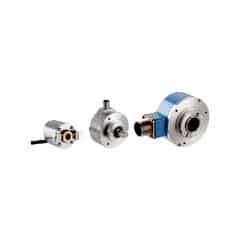
Sick Encoder series
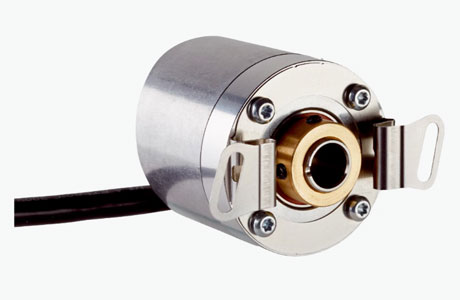
Sick Encoders: DBS36 Core and DBS50 Series
Designs: Blind hollow shaft or face mount flange with solid shaft. Communication Interfaces: TTL/RS-422, HTL/push pull, Open Collector. Electrical Data: Cable or male connectors (M12/M23), 4.5 V to 30 V supply.
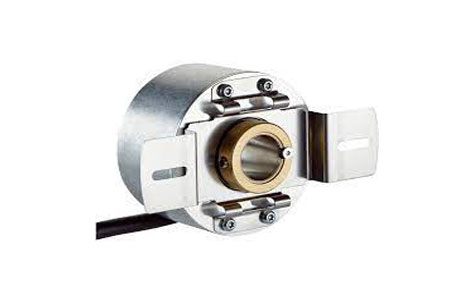
Sick Rotary Encoders: DBS60 Series
Interface Options: TTL, HTL, Universal (4.5 V to 30 V with automatic TTL/HTL adaptation). Flange Types: Standard, Face Mount, Servo. Temperature Range: Operational from –20°C to +85°C, optimal from –30°C to +100°C.
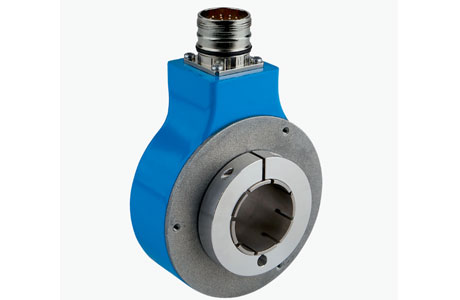
Sick Incremental Encoders: DGS80 Series
Pulses per Revolution: 0 to 8,192. Hollow Shaft Diameters: 30 mm or 42 mm; Protection Class: IP65. Supply Voltage Range: 5 V to 30 V; Output Frequency: ≤ 300 kHz.

Sick Absolute Encoders: AFS/AFM60 Series
Scalable resolution and preset functions. Configurable IP address, speed measurement unit, and increments per revolution. Function block requirements for PLC integration.
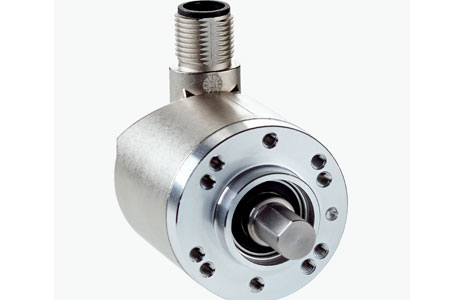
Sick Rotary Absolute Encoder: AHS/AHM36 Series
Types: AHS36 (Singleturn) and AHM36 (Multiturn). Interfaces: IO-Link V1.1 / COM3 (230.4 kBaud). Process Data Communication: Via IO-Link. Enclosure Rating: Up to IP67; Operating Temperature Range: −40 °C to +85 °C.
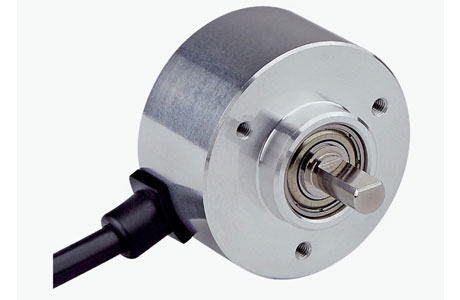
Sick Incremental Encoder: DLS40 Series
Housing: Solid zinc die-casting, 50 mm diameter. Protection: IP 64 class. Electrical Interfaces: 4.5 – 5.5 V, Open Collector NPN, TTL/RS422, 10 – 30 V, HTL.
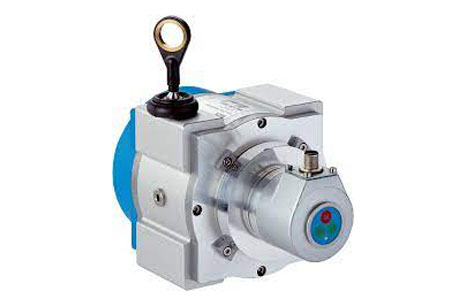
Sick Wire Draw Encoder: PRF And BTF Series
Measuring Lengths: Ranges from 2 m to 50 m. Connection Types: Various types including M12, M23 connectors, and cables. Operating Current: Generally ≤ 80 mA (without load).
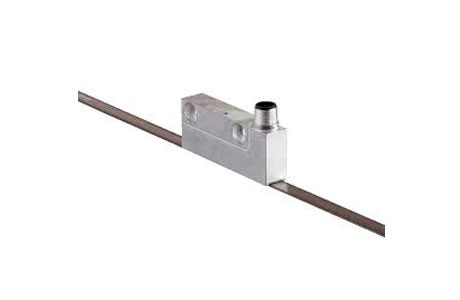
Sick Linear Encoder: TTK70 Series
Measuring Length: Up to 3,920 mm. Connection Type: Male connector, M12, 12-pin. Operating Temperature Range: Read head –30 °C to +85 °C, Magnetic tape –20 °C to +100 °C.
About Sick Encoder
Product List:
15 mm ≤ 0.7 W (without load) 4.5 … 32 V Blind hollow shaft Male connector, M23, 12-pole, radial AFM60B-S4AA004096 10 mm ≤ 0.7 W (without load) 4.5 … 32 V Solid shaft, face mount flange Male connector, M23, 12-pin, radial DFS60B-S1PC10000 6 mm ≤ 0.7 W (without load) 4.5 … 32 V Solid shaft, Servo flange Male connector, M12, 8-pin, radial AFM60A-BDNB018x12 0 m … 5 m 15.25 mm x 49.2 mm x 22.2 mm 10 V DC … 30 V DC PNP Male connector M12, 4-pin IndMALL Automation provides a complete range of SICK encoders designed for accurate speed, position, and motion control in industrial automation.
Sick Encoder FAQs
What is a Sick Encoder?
A SICK encoder is a device used for precise speed measurement and position detection. These encoders provide real-time data, which is sent to a process controller or cloud for better control. They support closed-loop systems, helping to maintain accuracy in tasks like conveyor belt movement, robotic arms, and assembly lines.
What is a Sick Linear Measuring Encoder?
A SICK linear measuring encoder is a specialized device for accurately measuring linear movement. It converts linear displacement into digital signals, essential for precision tasks in automation and control systems. These encoders are widely used in industrial settings for exact positioning and speed monitoring of linear motion.
What is a Draw Wire Encoder?
A draw wire encoder is a device that measures linear motion using a retractable wire. As the wire extends or retracts, the encoder translates this movement into electrical signals. This mechanism allows for precise tracking of position or distance in various industrial applications, offering a compact and versatile solution for linear measurement.
What is the Principle of Linear Encoder?
A linear encoder operates on the principle of sensor reading scale markings. These markings are either optical, magnetic, or inductive. As the encoder moves along the scale, it translates the markings into digital signals. This process accurately measures linear displacement, providing precise position and speed data for various applications.
Need Sick Encoder?
Send the model number, quantity and your company details to IndMALL on WhatsApp at +91 79955 44066. We connect you with the right suppliers.