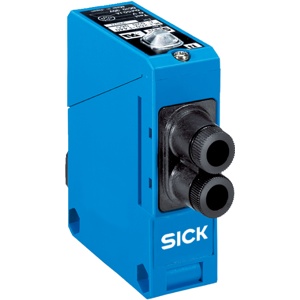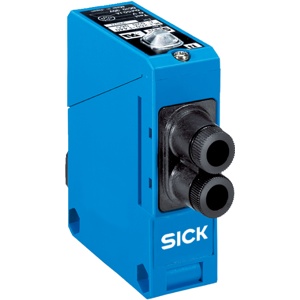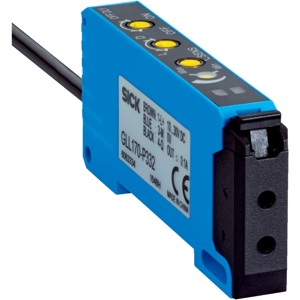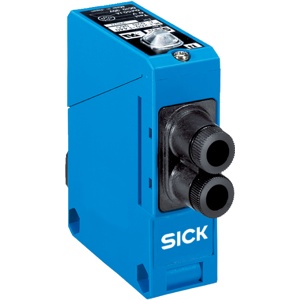
Image for reference. Refer to the datasheet for exact dimensions.
Sick WLL260-R240 Fiber Optic Sensor
Obtain a quote for Sick Relay Output Fiber Optic Sensor WLL260-R240, 6009503 at the lowest pricing. Plastic, ABS, Light/dark switching, Visible red light.
- Brand
- Sick
- Model number
- WLL260-R240
Send this enquiry to IndMALL on WhatsApp — the model and page link are filled in. Add the quantity and your company details, and we connect you with the right suppliers.
Sick WLL260-R240 technical specifications
| Device type | Fiber-optic sensors |
|---|---|
| Dimensions (W x H x D) | 25 mm x 77.8 mm x 63 mm |
| Housing design (light emission) | Rectangular |
| Sensing range max. | 0 mm ... 65 mm (Proximity system) 1) 2)0 mm ... 110 mm (Proximity system) 1) 3)0 mm ... 800 mm (Through-beam system) 2) |
| Sensing range | 0 mm ... 50 mm, Proximity system 2)0 mm ... 90 mm, Proximity system 3)0 mm ... 700 mm, Through-beam system 2) |
| Type of light | Visible red light |
| Light source | LED |
| Wave length | N/A |
| Indication | LED |
| Supply voltage | N/A |
| Current consumption | N/A |
| Switching output | Relay, electrically isolated 2) |
| Switching mode | Light/dark switching 2) |
| Response time | ≤ 20 ms |
| Switching frequency | 25 Hz 3) |
| Connection type | Cable gland |
| Housing material | Plastic, ABS |
| Ambient operating temperature | –25 °C ... +55 °C |
| Ambient temperature, storage | –40 °C ... +70 °C |
| Weight | 120 g |
Overview
Sick WLL260-R240 Fiber Optic Sensor features rectangular housing, visible red LED light, relay output, and proximity sensing capability applications. This Sick Relay Output Fiber Optic Sensor supports light/dark switching , provides electrically isolated relay output , delivers ≤ 20 ms response time , and maintains a 25 Hz switching frequency for industrial automation. The WLL260-R240 belongs to the WLL series and is applied where electrical isolation and stable optical detection are required. Its relay output enables safe interfacing with varied control circuits, while the proximity sensing capability supports accurate detection of objects. The defined response time and switching frequency help ensure consistent signal behavior in continuous automation workflows.